LOOK INTO YOUR DATA, NOT AT YOUR DATA

Simulacra turns your existing research into a causal scenario engine. Expand cohorts. Cut fieldwork. Predict outcomes.

With SAPR (Synthetic Augmentation from Prior Research), cut fieldwork by up to 50%, expand hard-to-reach cohorts, and run causal what-if scenarios in real time. Independently validated on a public benchmark.

Schedule a Demo
STRESS TEST WHAT-IF SCENARIOS
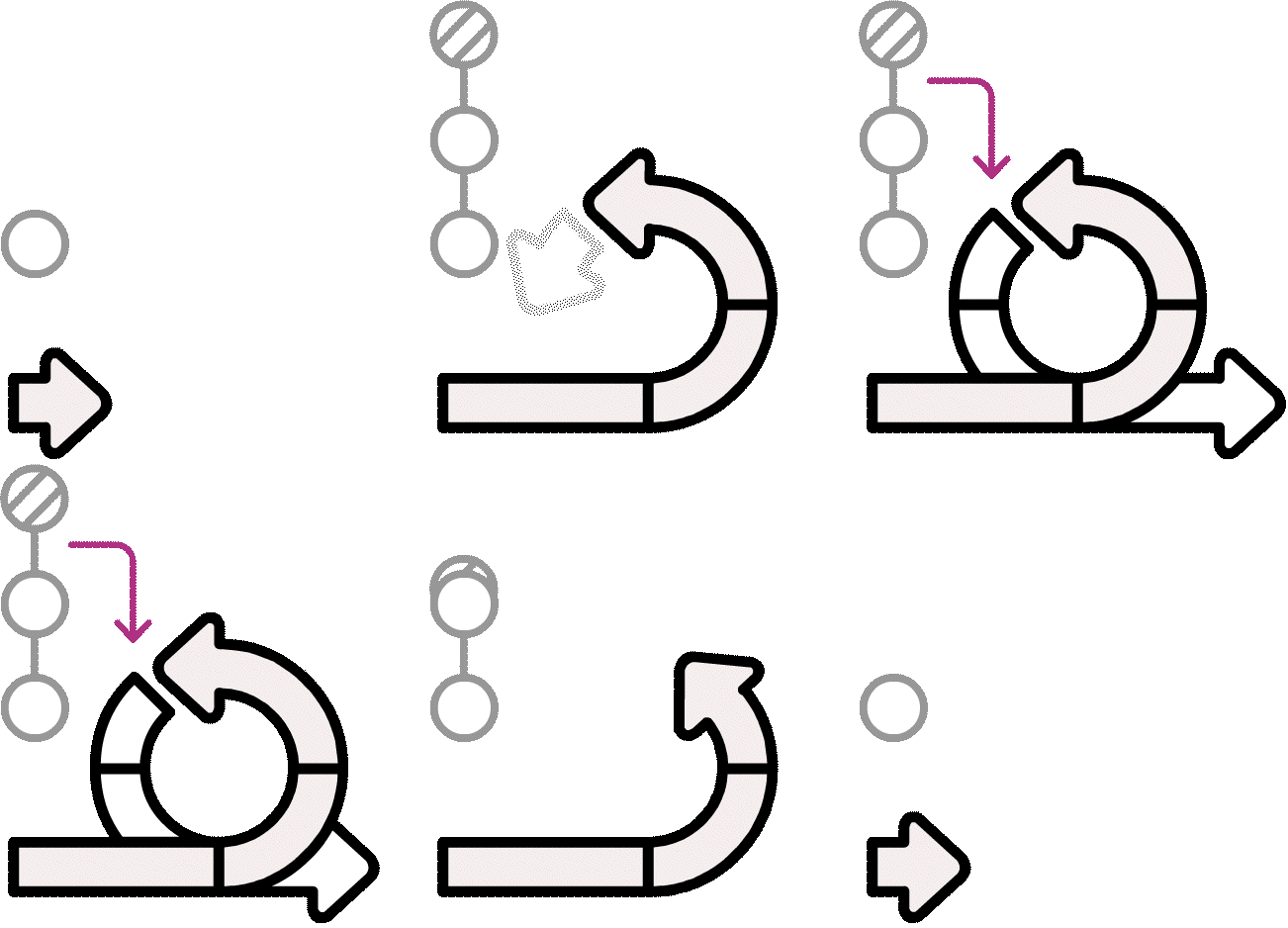
Change any variable and see how the entire dataset responds. Test pricing, audience, product, or messaging scenarios.
CONDITION ANY VARIABLE
Set the conditions you want to test and Simulacra generates the most statistically likely dataset reflecting those parameters.
BOOST SAMPLE POWER
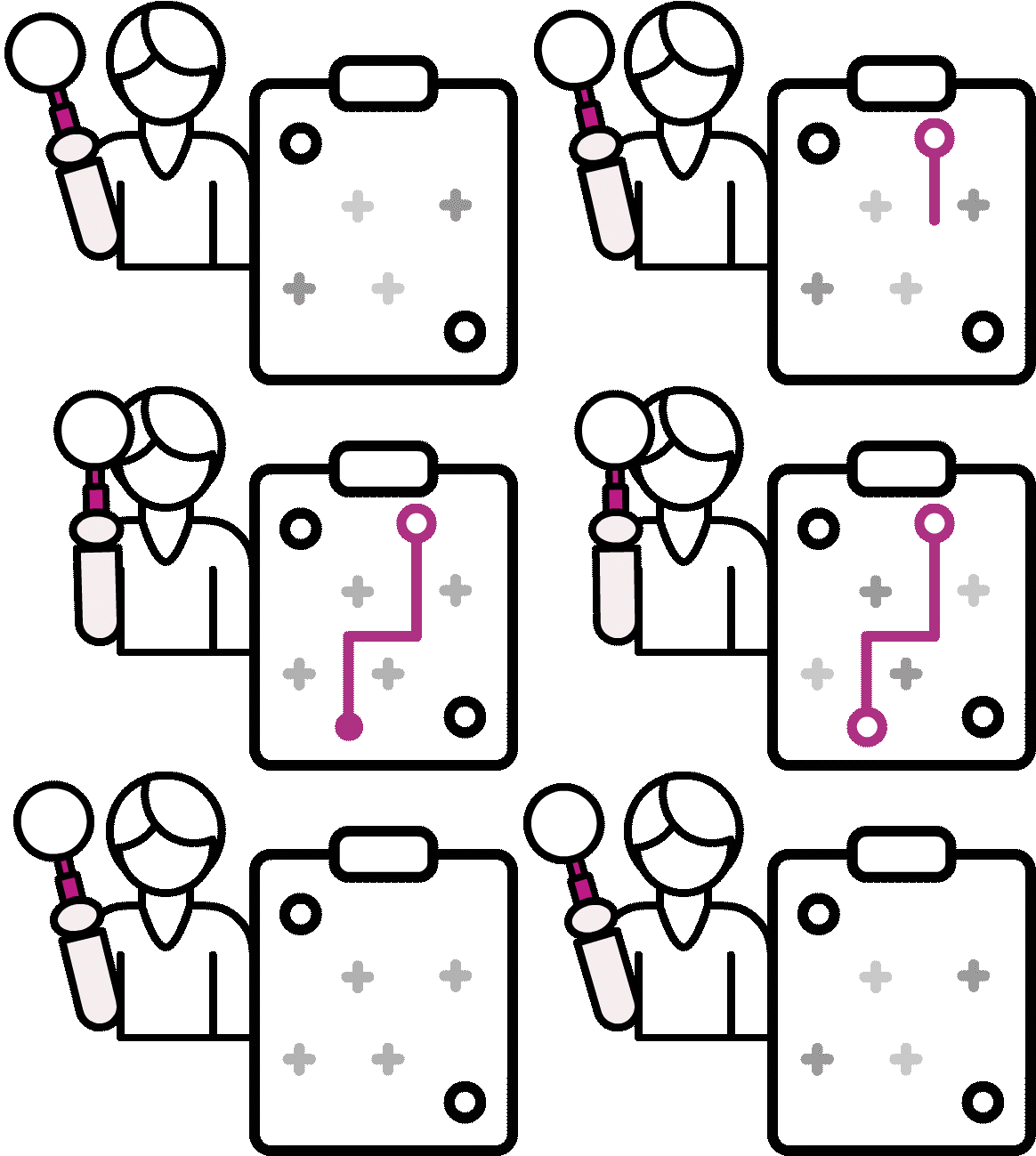
Expand your dataset by 3X, 5X, or 10X while preserving the statistical relationships of the original data.

WHO USES SIMULACRA?

Product Developers

Pressure-test concepts, formulas, claims, and target segments before the next expensive step

Market Researchers

Get more decision value from completed studies while reducing new fieldwork

Brand Managers

Stress-test messaging, positioning, packaging, and audience assumptions before committing spend

Consumer Researchers

Reveal the causal drivers behind preference, behavior, and choice from data you already have

SOC 2 Type II

ISO/IEC 27001

Turn past research into future decisions.

Simulacra pairs Causal AI with high-fidelity synthetic data to run real-time what-if scenarios using the data you already have. Extend prior research, expand hard-to-reach cohorts, cut new fieldwork, and test decisions before you commit.

Health & Body Care

Test formula, sensory, claims, pricing, and packaging scenarios before committing to new fieldwork or product development cycles.
+ Read more
Simulacra lets you expand those datasets, boost underrepresented demographics, and model how formulation changes would shift preference scores before you reformulate. Predict switching behavior and run pricing scenarios on segments too small to study traditionally.
Best used when the source study already measured the variables you want to explore and your team needs a defensible way to decide whether more fieldwork is needed.

Advertising & Marketing

Model how different messaging, audience mixes, creative directions, and offer scenarios perform using variables already measured in prior research.
+ Read more
Simulacra lets teams model how measured audience segments may respond when assumptions change. Use it to compare scenarios before campaign spend, media planning, or another round of research.

Research Agencies

Deliver more insight from every study. Independently validated as 64% more accurate than real-data subsampling.
+ Read more
Tested on a public benchmark: 2,058 respondents, 717 variables. Simulacra was 64% more accurate than real-data subsampling. An ML classifier couldn't tell synthetic from real. LLM-based tools collapsed on 93.9% of variables. Give clients numbers they can defend. Simulacra's diffusion-model Causal AI learns the actual structure of how people think, choose, and respond. Reduce re-fielding costs, protect margins, and raise the quality of every deliverable.

Consumer Packaged Goods

Get more decision value from completed consumer studies across products, brands, packaging, pricing, claims, and target segments.
+ Read more
Simulacra helps CPG teams expand hard-to-reach cohorts, rebalance measured segments, and run product, brand, or pricing scenarios before commissioning another study. Use it when completed research has more value to extract but the next decision requires more confidence at the segment level.

A STUDIO, FIT FOR A (DATA) ARTIST

1.

Most completed studies are underused after the first report.

THE COMMON RESEARCH PROBLEM

THIN CELLS: Priority segments often have too few respondents for confident reads.

STALE STUDIES: Valuable research loses usefulness as new questions emerge.

EXPENSIVE FOLLOW-UPS: Teams choose between more fieldwork, more delay, or more uncertainty.

2.

What Simulacra Changes

REAL-TIME SCENARIO MODELING: Adjust variables and see how outcomes shift instantly, not in weeks.

MEASURED-VARIABLE AUGMENTATION: Simulacra works within the variables your study already captured. It doesn't invent answers to questions you didn't ask.

VALIDATION BEFORE USE: Holdout testing and relationship checks help determine where synthetic expansion is appropriate and where it isn't.

3.

What Teams Can Do

STABILIZE SMALL CELLS: Strengthen underpowered segment reads in completed studies.

BOOST LOW-INCIDENCE COHORTS: Expand hard-to-read audiences using variables already in the dataset.

REBALANCE SCENARIOS: Explore how outcomes may shift under different audience or market assumptions.

MODEL CONSUMER BEHAVIOR: See how changes in measured variables influence preferences and purchasing decisions.

4.

From Static Report to Reusable Research

FROM RIGID TO RESPONSIVE: Make completed research useful beyond the first readout.

FROM THIN CUTS TO TESTED EXPANSION: Use validation to determine where synthetic augmentation supports better decisions.

FROM ASSUMPTIONS TO DOCUMENTED SCENARIOS: Show stakeholders what was modeled, what was measured, and what limits apply.

5.

Who Benefits

RESEARCH TEAMS: Get more value from completed studies without overclaiming what the data can support.

INSIGHT LEADERS: Reduce unnecessary re-fielding and give stakeholders clearer decision support.

BRAND AND PRODUCT TEAMS: Test choices before committing budget or launch plans.

6.

Why It Matters

LESS WASTE: Reuse research you already paid for before commissioning another study.

MORE CONFIDENCE: Validate synthetic expansion before it informs decisions.

BETTER SEGMENT-LEVEL READS: Support decisions where the original sample was too thin.

Make completed research decision-ready.
Start with one study.

Get in Touch

Request a demo and we'll show how a completed quantitative study becomes a causal scenario model. Bring your own data or use ours.

Request a demo and we'll show how a completed quantitative study becomes a causal scenario model. Bring your own data or use ours.

Thank you! Your submission has been received!
Oops! Something went wrong while submitting the form.